You spent two weeks preparing a forty-minute talk. You delivered it well. People nodded and asked good questions. Then it went into a folder as a video file, and that was the end of it.
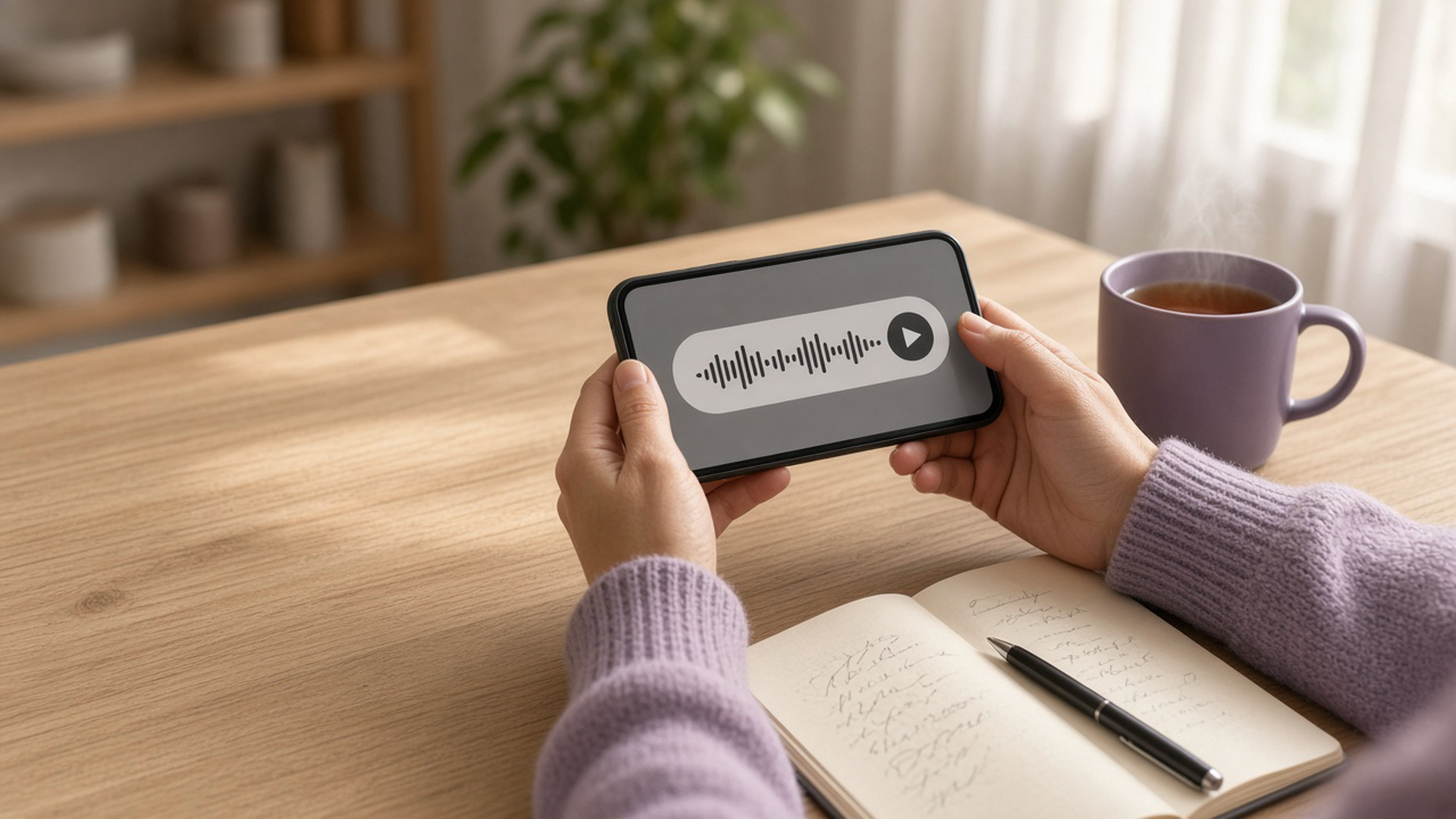
It's been sitting in your chat for two days: a little play button and a duration of 4:37. You know there's something in there you need. You just haven't found four and a half quiet minutes to hear it.
Your manager spent twenty minutes on what's going well and ninety seconds on one thing to improve. Guess which part you replayed in the shower for a week.
You understood every email this week. Then the call started, three people talked over each other, and you caught maybe sixty percent. The problem isn't your English. It's the format.
You pause the recording at the important bit and tell yourself you'll remember the timestamp. Next week the number is useless. A real bookmark needs a page.
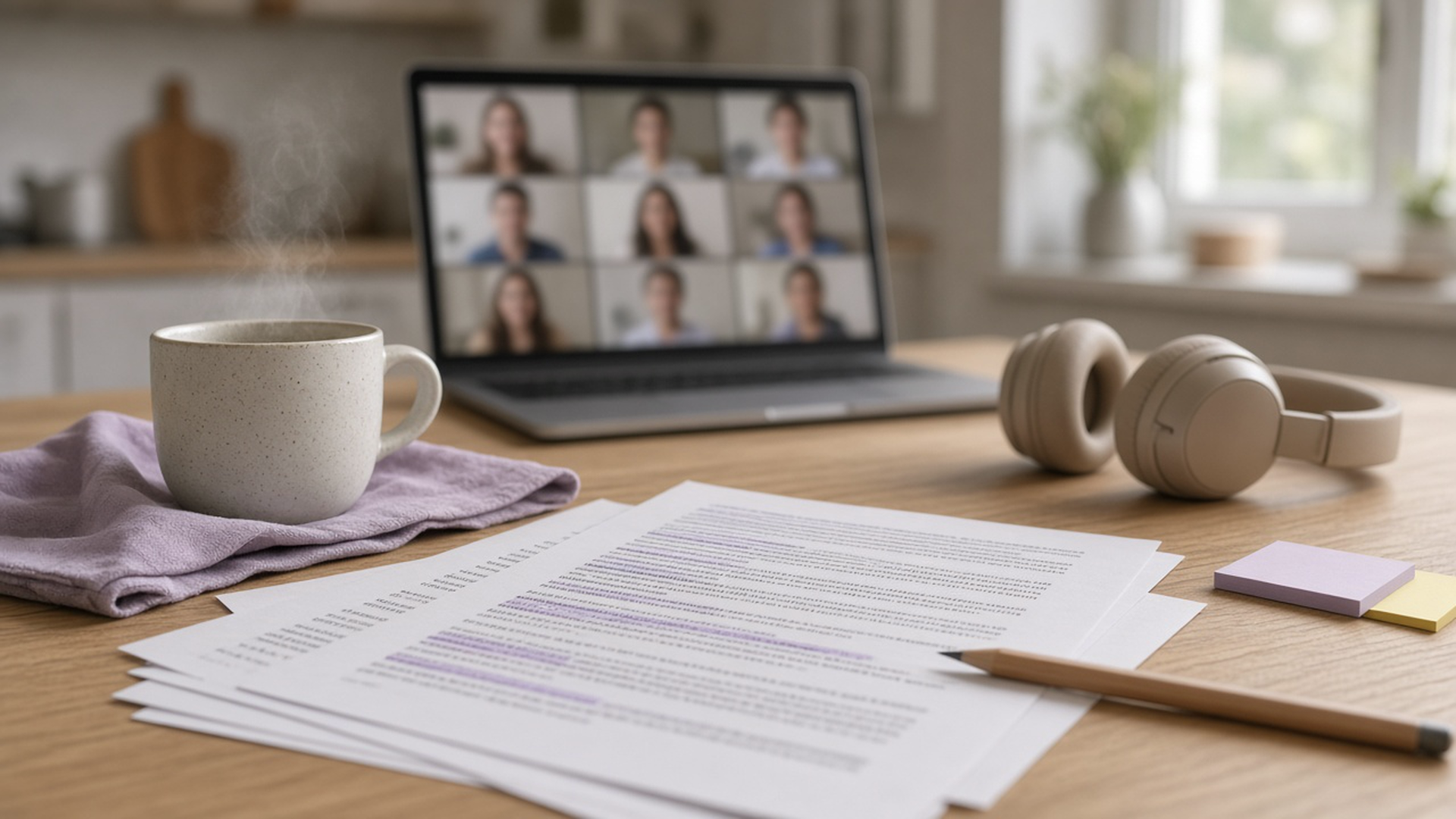
You recorded the walkthrough so the team would not have to ask again. A month later, the answer is still buried in a video nobody will open. The recording kept the demo. It did not become the doc.
The decision that changed the plan was said once, mid-sentence, while someone was sharing a screen. Nobody wrote it down. Weeks later, everyone remembers a different version.
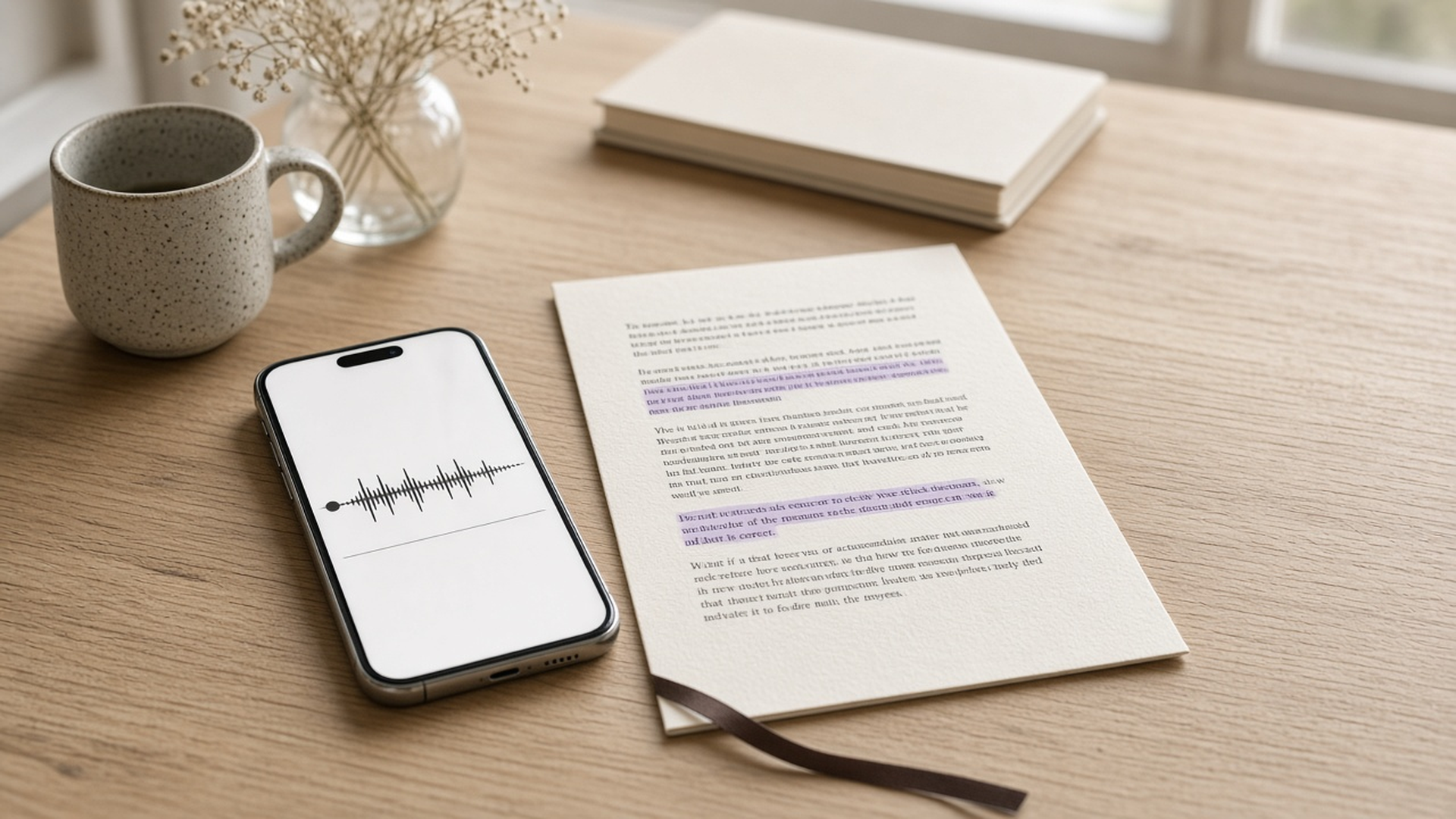
You walk out of the appointment nodding. By dinner, you can't remember the dose, the follow-up date, or what the second option was. A recording keeps the conversation. A transcript is what you can actually reread.
You leave the call sure you understood the customer. Then you write the homepage in your own words. The phrases that would have sold them are sitting in a recording you will never replay.
transcriptionmarketingcopywritingcustomer research
The best family history isn't in an archive. It's in the way your grandfather tells the story about the train. A recording keeps his voice; a transcript is what lets the next generation actually find, read, and share it.
Scripts read well and sound stiff. Rehearsals sound natural and wander. Transcribing a practice run gives you the honest middle: what you really say, on a page you can cut.
Nobody in a live meeting can reliably tell how airtime was split. The loudest person feels normal. Quiet people feel louder than they were. The transcript is the only honest count.