The Voice Message You Haven't Played Yet
Long voice messages are easy to send and hard to receive. They can't be skimmed, searched, or answered point by point, so they sit unplayed. Turning them into text fixes the receiving side without asking anyone to change how they talk.
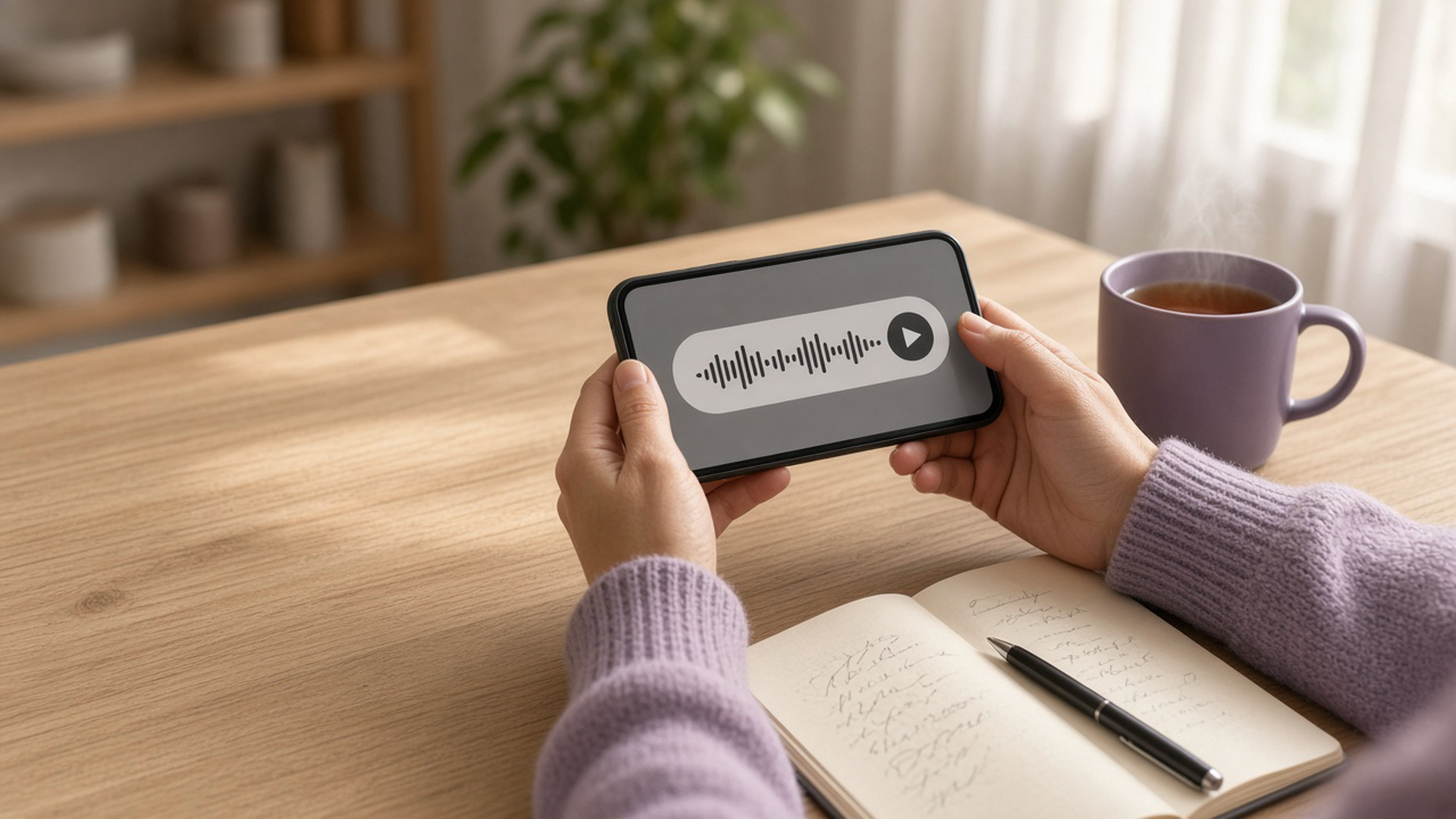
It's been sitting in your chat for two days. A small play button, a squiggly waveform, and a number: 4:37.
You know roughly who it's from and roughly what it's about. A friend planning a trip. A colleague explaining a change to the project. Your landlord, your kid's coach, a client who prefers talking to typing. Somewhere in those four and a half minutes there's a date, a question, or a decision you need. You just haven't found four and a half quiet minutes, with headphones, to hear it.
So it waits. And the longer it waits, the more awkward it becomes to reply.
This isn't a story about rude senders or lazy receivers. Voice messages are built for the person talking, not the person listening, and most of the friction comes from that mismatch.
Easy to send, expensive to receive
For the sender, a voice message is wonderful. You're walking, driving, or cooking. Typing would take ten minutes and lose your tone. Talking takes three, and you can think out loud, add context as it occurs to you, and sound like yourself.
For the receiver, the same message comes with a list of hidden costs.
It demands a moment. Text can be read in a meeting, on a train, in a waiting room. Audio needs privacy or headphones, and it needs your attention for exactly as long as the sender chose to talk.
It can't be skimmed. With text, your eye jumps to the important line. With audio, the important line might be at 3:50, after a story about traffic and a side note about someone's dog. You can speed it up, but faster isn't the same as findable.
It can't be searched. A week later, when you need the address or the time they mentioned, you can't type a word into the chat search and find it. You have to remember which message it was in, then listen again.
It's hard to answer. A long voice message usually contains several points. Replying well means addressing each one, which means remembering each one, which means listening again with a notepad. Many people quietly give up and reply to the last thing they heard.
The quiet cost of "I'll listen later"
Unplayed voice messages pile up in a particular way. Each one feels small. Together they become a low hum of things you owe people.
Worse, the content inside them is often time-sensitive. "Can you confirm by Thursday?" doesn't work if you hear it on Friday. "Bring the blue folder, not the black one" is only useful before you leave the house. The information was delivered on time; it just wasn't received on time.
And when you finally do listen, it's often in a rush, in a noisy place, at double speed. That's exactly when details slip. You catch the gist and miss the one specific thing that mattered.
Why rambling isn't the problem
It's tempting to blame the sender. Why not just get to the point?
But the rambling is part of what makes voice messages valuable. People explain their reasoning, share how they feel, mention things they wouldn't bother typing. A colleague's voice note about a design change might include a throwaway line about what the client actually objected to, which is the most useful sentence in the whole message. A parent's long message about a family dinner might be the only record of a story you'll want later.
The problem isn't that voice messages contain too much. It's that audio gives the listener no way to navigate what's there. Text solves that without asking anyone to talk differently.
What changes when the message becomes text
Once a voice message is turned into a transcript, the costs shift back toward something manageable.
You can read it anywhere. In a meeting, on a silent train, at 11 p.m. next to someone sleeping. Reading a four-minute message takes about a minute.
You can skim it. Your eye finds the question, the date, the request. The story about traffic is still there if you want it, but it no longer stands between you and the point.
You can search it. Save the text and the address, the price, or the name of that restaurant is a quick search away instead of buried in an audio file.
You can answer properly. With the message in front of you, replying point by point is easy. You can even quote their words back: "You said the venue needs a final count by the 14th. It's eighteen people." That kind of reply makes people feel heard, which is the whole reason they sent a voice message in the first place.
When it matters most
Not every voice note needs a transcript. A ten-second "on my way" is fine as it is. But some kinds of messages are worth turning into text almost every time.
- Instructions. Directions to a house, how to feed the cat, how a client wants something formatted. Anything you'll need to follow step by step.
- Work explanations. A teammate walking you through a change, a manager giving feedback on a draft, a client describing what they want. These often contain decisions you'll need to point back to.
- Plans with details. Trips, events, schedules. Dates, times, and places are exactly the things that are easy to mishear and painful to get wrong.
- Messages in another language, or from someone who speaks quickly. Reading lets you go at your own pace and look up words you didn't catch.
- Messages you want to keep. A grandparent's birthday wishes, a friend's long, thoughtful reply after a hard week. Audio files get lost when you change phones or apps. A text copy is easy to save next to the recording.
A small routine for long voice notes
If voice messages regularly pile up for you, a simple habit helps.
- Save the audio from the chat as a file when a message is longer than a minute or so. Most messaging apps let you share or export it.
- Turn it into text and read it when you have a minute, without hunting for headphones.
- Highlight the asks: questions, deadlines, anything that needs a reply or an action.
- Reply point by point, using the sender's own words where it helps.
- Keep the text if the message holds information you'll need again, such as an address, a decision, or instructions.
The whole thing usually takes less time than listening once, and far less than listening three times to find one detail.
A note on courtesy
If you send voice messages, the kindest thing you can do is the obvious one: put the most important point first. "Quick question about Saturday, can you bring chairs?" followed by the backstory is much easier to act on than the backstory followed by the question.
If you receive them, there's no need to ask people to stop. Many people express themselves better out loud, and some find typing genuinely hard. Turning their messages into text lets them keep talking the way they like while you read the way that works for you.
Soft close
A voice message is a small piece of someone's time, offered in the format that was easiest for them. It deserves to be received properly, not left unplayed for three days or half-heard at double speed in a noisy café.
To The Text on iPhone turns recordings, voice notes, and videos into text you can read in a minute, search later, and answer point by point, so the message you haven't played yet stops being one more thing you owe someone.