Rehearse Out Loud, Edit on Paper
The talk you wrote is not the talk you give. Record a rehearsal, read it back as text, and edit the version that actually comes out of your mouth.
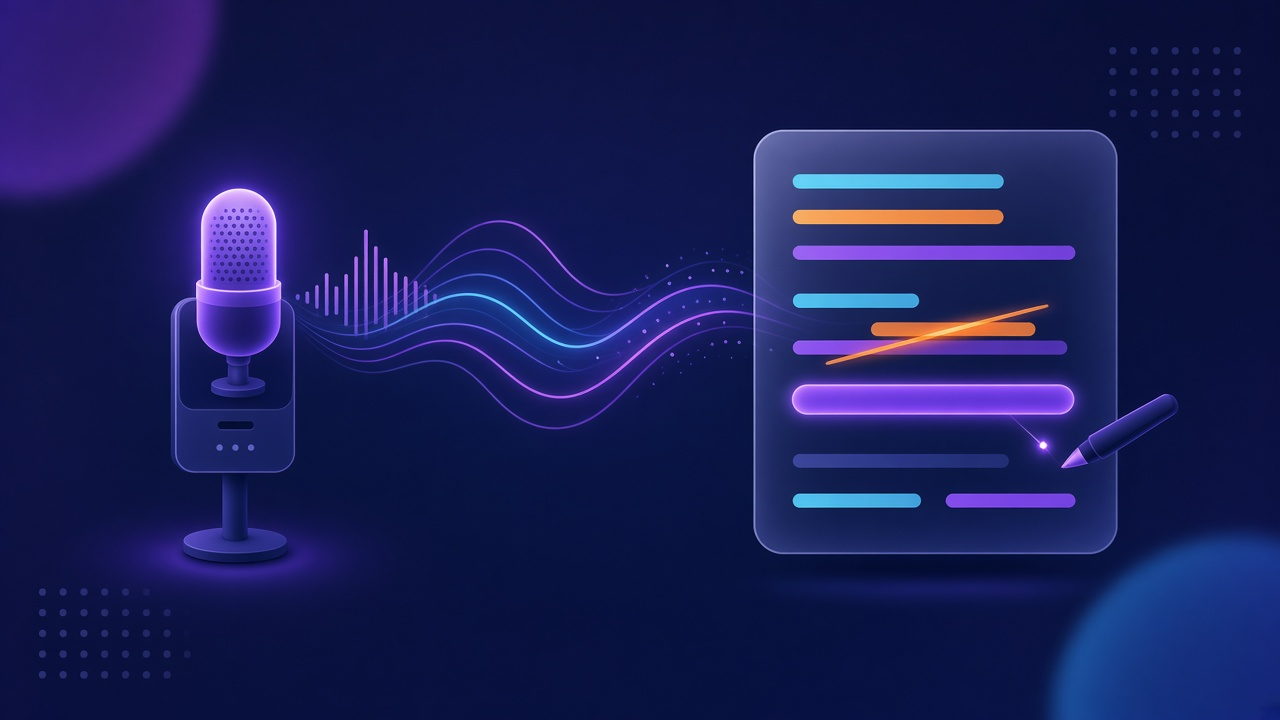
You wrote the talk. You polished the slides. You read the script three times and it was tight.
Then you stood up, opened your mouth, and a different talk came out.
Longer. Looser. With a tangent you never planned, a joke that wasn't in the notes, and an explanation of slide four that took twice as long as the slide itself. The written version and the spoken version were never the same talk. You only practiced one of them.
The script lies about how you speak
Writing and speaking are different crafts, and a script quietly hides the difference.
On the page, a sentence like "Given the constraints we faced in Q3, the team prioritized retention over acquisition" looks crisp. Said out loud, it is a mouthful. Most people don't deliver it as written. They paraphrase on the fly, add "basically," restart halfway, and land somewhere else.
Meanwhile, the parts that do work out loud — a short story, a blunt line, a pause — often never made it into the script at all. They show up in rehearsal, get a laugh from the mirror, and are forgotten by the next run.
So you end up editing a document nobody will hear, and never editing the thing people actually will.
Listening back doesn't fix it
The usual advice is to record yourself and listen. It helps a little. Mostly it is painful.
Audio plays at the speed you talked. You can't skim it. You can't see the structure. You notice your voice sounds strange and miss that the whole middle section repeats the opening. By minute six you are wincing instead of editing.
What you need is not to hear the rehearsal again. You need to look at it.
Read your rehearsal as text
Record a full run-through — phone on the table, no stopping, no do-overs. Turn it into a transcript. Then read it like an editor reads a draft.
A page makes things obvious that audio hides:
- Length per section. The "two-minute intro" is a paragraph you can measure. If it is a third of the page, it is a third of the talk.
- Repeats. You said the main point in the opening, again in the middle, and again in the conclusion — in nearly the same words.
- Verbal crutches. "So, basically," "what I'm trying to say is," "and honestly" — scattered across the page where you can circle them.
- Lost threads. A sentence that starts strong, wanders into a side note, and never comes back to finish.
- Accidental good lines. The phrasing you improvised that is better than anything in the script.
That last one is the real prize. Your best material often arrives while you are talking, not while you are typing. A transcript is how you catch it.
A five-minute pitch (hypothetical)
Imagine a founder rehearsing a five-minute pitch. The script is about the right length. The first rehearsal, read back as text, looks like this:
| Section | In the script | In the rehearsal transcript |
|---|---|---|
| Problem | Three tight sentences | A long story about a customer, told twice |
| Product | One paragraph | Short, clear, almost word for word |
| Traction | A list of numbers | Numbers rushed, plus "I'll come back to that" (never does) |
| Ask | Closing line | Trails off: "so, yeah, that's kind of it" |
Nothing here is a disaster. But now the edit is obvious. Keep the customer story — it is clearly the part they love telling — and cut the retelling. Slow the numbers down. Write an actual last sentence and say it until it sticks.
None of that was visible in the script. All of it was visible on the page of what they actually said.
The script tells you what you meant to say. The transcript tells you what you say.
Edit, then rehearse the edit
The loop is simple:
- Rehearse the whole thing once, out loud, recorded. No restarts. The stumbles are data.
- Read the transcript with a pen. Mark what to cut, what to keep, and any line you want to steal from yourself.
- Rewrite the notes from the transcript, not the original script. Your spoken phrasing becomes the new baseline.
- Rehearse again and compare. Two transcripts side by side show whether the cut actually happened or crept back in.
Two or three loops usually do more than a dozen silent read-throughs. You stop polishing prose and start shaping a talk.
Don't scrub it into a speech nobody gives
One warning. When you edit from a transcript, it is tempting to clean it until it reads like an essay again. Resist that.
Keep the short sentences. Keep the plain words you naturally reach for. Keep the story in the order you tell it, not the order that looks logical on a slide. The goal is not a perfect document. It is notes that match the way you really talk, so you can deliver them without sounding like you are reading.
It works beyond keynotes, too: a job interview answer you keep fumbling, a toast, a lecture, a video script, a hard conversation you want to get right. Anything you will say instead of send.
Soft close
The talk you wrote and the talk you give are two drafts. Most people only ever edit the first.
Next time, give one honest run-through out loud, read it back as text, and edit the version that actually comes out of your mouth.
To The Text on iPhone can turn a recorded rehearsal into a readable transcript, so you can see your talk on the page before anyone else hears it.