Your Whiteboard Photo Is Not the Discussion
Photographing the whiteboard feels like capturing the meeting. The photo has shapes and arrows — not the spoken decisions that made them mean something. Without a transcript, it is a mystery.
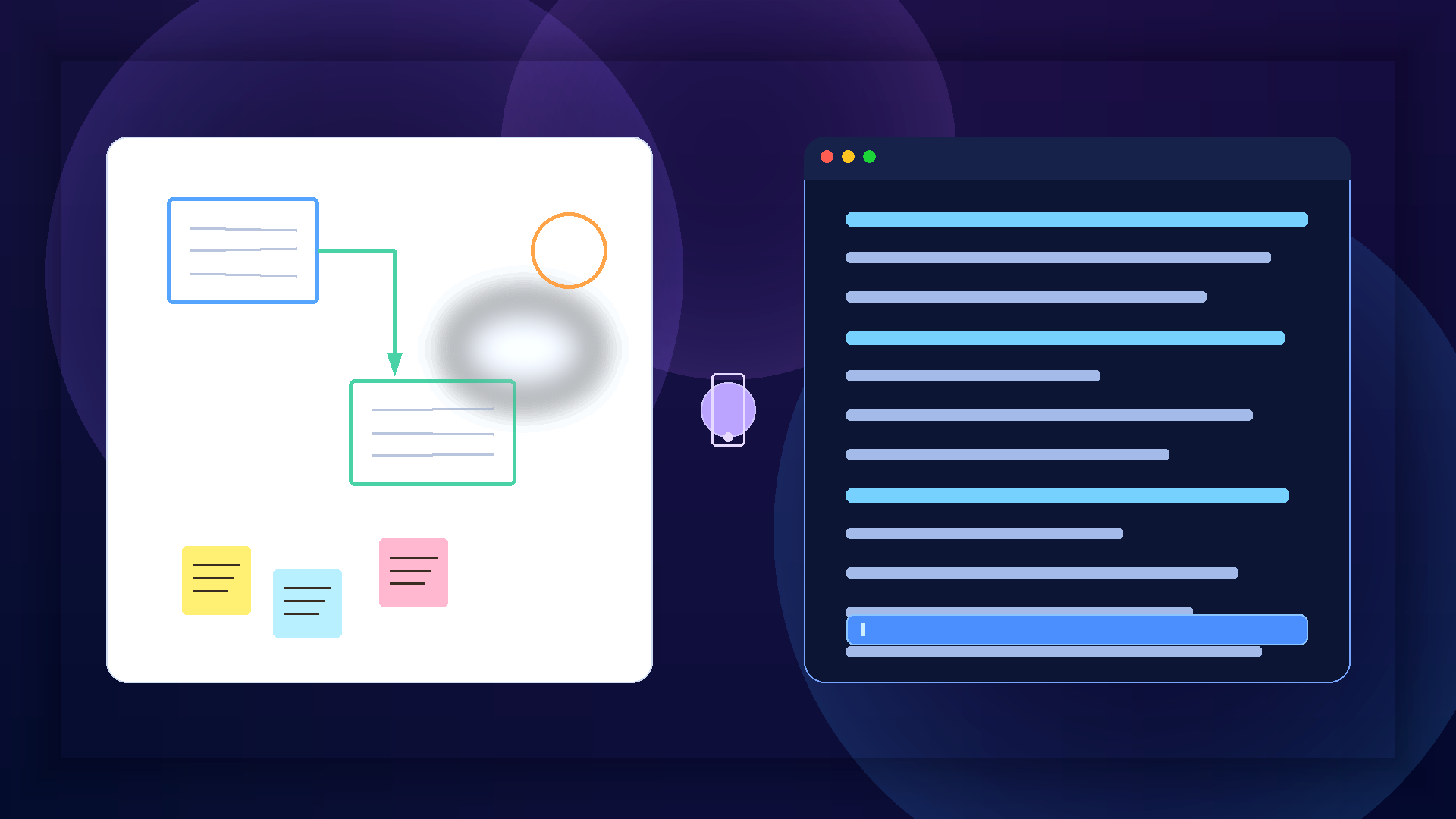
The meeting ends. Someone stands up, phones out, and photographs the whiteboard.
Boxes. Arrows. Half-erased stick figures. A sticky note that says "Q3???" in three different colors.
People nod. The room empties. It feels finished — as if the discussion just got saved.
It did not. You saved a picture of marks. The meaning lived in the spoken sentences that never made it into the frame.
A photo of marks is not a record of decisions
Whiteboards are thinking surfaces. They are excellent for that. They are terrible as the only archive.
What the camera captures:
- Shapes someone drew while talking
- Arrows that only made sense with a gesture
- Words abbreviated mid-sentence
- A diagram that changed three times and kept the scars
What the camera misses:
- The objection that killed option B
- The hedge in "we might ship Friday"
- Who actually agreed, and who stayed quiet
- The joke that became the real plan five minutes later
The discussion was audio. The whiteboard was a prop. Photographing the prop does not recover the play.
Why the ritual feels so complete
Snapping the board scratches a psychological itch. Visible ink looks like work product. A photo in Photos or Slack looks like a file. Files feel owned.
So teams treat the shot as closure:
- "It's in the channel"
- "We have the board"
- "Anyone who missed it can catch up from the image"
Catch up from what? A rectangle of marker dust. Without the talk that annotated it, the image is a Rorschach test. Two people who were in the room already disagree about what the red arrow meant. Someone who was not there has no chance.
The ritual feels complete because something was saved. Completeness is not the same as usefulness.
The mystery for everyone who wasn't there
Open a whiteboard photo a week later. Try to answer:
- What did we decide? — The board shows candidates. Decisions were spoken.
- What did we reject? — Crossed-out boxes rarely say why.
- What is the next step? — "Owner: ???" is not an assignment.
- What was the exact wording? — There is none. Only shapes.
Even attendees struggle. Memory fills gaps with confidence. The photo anchors the wrong confidence: people remember drawing the box more clearly than the sentence that defined it.
Hand the same PNG to a new hire. They see hierarchy that was never agreed, timelines that were jokes, and labels that meant something only in minute forty-seven of a messy debate.
Different from minutes. Different from a recording.
Meeting minutes are an editorial cut. Someone chose headlines. Useful as a digest. Dangerous as the sole source of truth — that gap is a different article.
A recording keeps the audio (and maybe video). Better than a photo of dry-erase. Still a tax: scrubbing is not searching, and playback is not pasting.
A whiteboard photo sits in a sneakier category. It looks like documentation — visual, shareable, "in the docs folder" — while carrying almost none of the spoken contract. It is closer to a souvenir than to a source.
The test that matters
After the next workshop or planning session, ask:
Can someone who missed the room reconstruct the decision from what we filed — without pinging the people who were there?
If the answer depends on:
- Squinting at a photo
- Guessing what an arrow meant
- Asking "wait, what did we say about the red box?"
…then you did not keep the discussion. You kept scenery.
A transcript passes a harsher version of the same test: can you paste the sentence into a ticket, a PR, or a follow-up? Marker strokes fail that test by design. They were never sentences.
What to keep instead
Keep the whiteboard. Photograph it if you want the diagram. Just do not pretend the photo is the meeting.
- Record the conversation when decisions matter (and people know).
- Turn the recording into text — a transcript you can skim, search, and quote.
- File the transcript next to the photo — diagram for shape, text for meaning.
- Write the decision in words once, from the transcript, not from memory of ink.
The board shows how you thought. The transcript shows what you said. You need both. One of them is usually missing.
Soft close
A whiteboard photo is a kindness to future-you who wants the sketch. It is not a substitute for the discussion that gave the sketch meaning.
When the room empties and the only artifact is a glare-caught PNG of arrows and sticky notes, you still do not own the conversation. Own the words.
To The Text turns meeting recordings and video on your iPhone into clean text you can paste beside the board photo — so the diagram stays useful, and the decisions stay findable.