You Can't Compare Candidates From Memory
By the end of a hiring week, five interviews blur into one impression. Recording interviews (with consent) and reading the transcripts side by side makes hiring decisions fairer, calmer, and easier to explain.
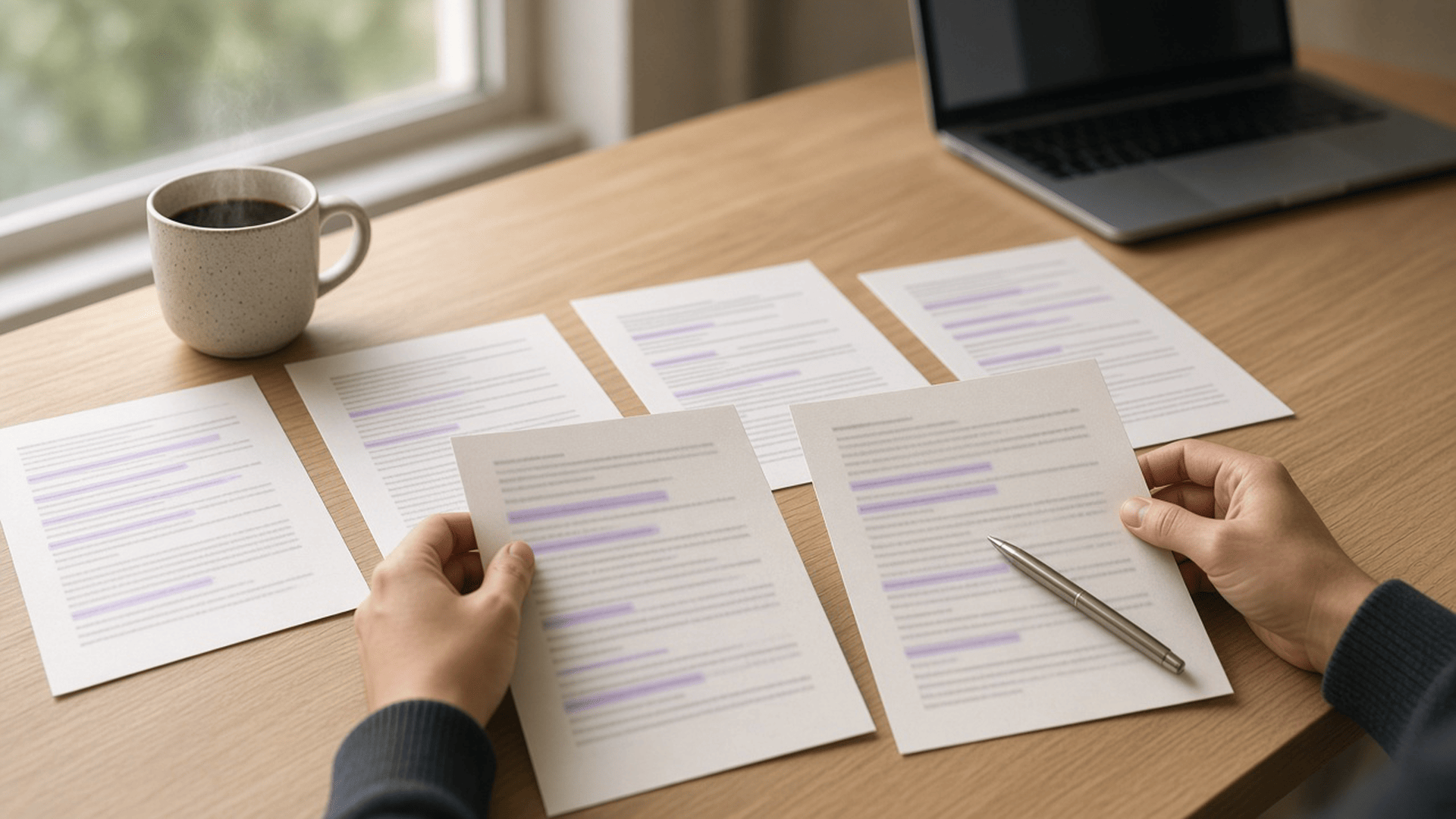
On Monday you interviewed someone brilliant. You remember leaving the call thinking, that's the one. By Friday you've talked to four more people, and Monday's candidate has shrunk to a single adjective and a vague feeling. "Sharp. I liked her." That's all that's left.
Now you're in the debrief, and everyone else has their own adjectives. Someone says the Wednesday candidate "seemed more senior." Someone else says the Thursday one "had great energy." Nobody can say exactly what anyone answered to the system design question, because nobody wrote it down in a way that survived the week.
This is how most hiring decisions get made: by comparing memories of conversations, not the conversations themselves. And memory is a poor judge.
What memory does to an interview
Memory doesn't store interviews. It stores a story about them, and that story gets edited every time you think about it.
A few things happen reliably.
The most recent candidate looks best. Friday's interview is vivid; Monday's has faded. Vivid feels like strong. That's not a judgment about the candidates; it's a judgment about your calendar.
First impressions take over. If someone was nervous for the first five minutes, that nervousness can colour how you remember everything that came after, even the excellent answer they gave at minute thirty.
Style beats substance. You remember how confident someone sounded much better than what they actually said. A fluent speaker with a thin answer often lingers in memory as "strong," while a careful thinker who paused before answering lingers as "unsure."
Your notes are already an interpretation. Typing while someone talks means you capture what struck you as important in the moment. Anything you didn't expect to matter didn't make it in. Later, those gaps quietly become "they didn't mention it."
None of this makes you a bad interviewer. It makes you a person with one brain trying to hold five long conversations at once.
The transcript is the evidence
If you record interviews (and you should only do that openly, with the candidate's clear consent, and in line with local law and your company's policy), the transcript changes what the debrief is about.
Instead of "I felt like she understood the trade-offs," you can point to the paragraph where she explained them. Instead of "he seemed vague on the database question," you can read his answer and decide whether it was vague, or just phrased differently from what you expected.
The conversation shifts from whose impression wins to what was actually said. That's a better conversation, and usually a shorter one.
It also helps the people who weren't in the room. A hiring manager who missed one interview can read the relevant sections in ten minutes rather than relying on a colleague's summary, which is itself a memory of a memory.
Read answers side by side
The real power shows up when you ask everyone the same core questions. Structured interviews already help with fairness, but they only work if you can actually compare answers. With transcripts, you can.
Take one question, say, "Tell me about a project that went wrong," and paste each candidate's answer into a single document, one after another. Strip the names if you want to be strict about it.
Read them in a row. Something interesting happens: the answers stop being about personality and start being about content. You notice who described what they did versus what "we" did. Who named a specific mistake versus who described a generic lesson. Who explained what they'd do differently. These differences are often invisible across a week of separate calls, and obvious on one page.
You can do the same for technical questions, for questions about how people handle disagreement, or for the questions candidates asked you. The quality of a candidate's questions is a strong signal, and it's almost always the first thing memory drops.
Catch what you missed while talking
Interviewing is a split-attention job. You're listening, thinking about your next question, watching the clock, and trying to be friendly. You will miss things.
Reading the transcript afterwards, people regularly find:
- A detail the candidate mentioned in passing that actually answers a concern raised later in the debrief.
- A follow-up question they meant to ask and forgot.
- A moment where the candidate misunderstood the question, which explains a "weak" answer better than a lack of skill does.
- Places where the interviewer talked far more than the candidate, which is useful feedback for the interviewer, too.
That last one matters. Transcripts don't just evaluate candidates; they show you how you interview. If your questions run for two minutes and leave the candidate thirty seconds to answer, you'll see it in black and white.
Fairer for candidates, easier to defend
Hiring decisions affect people's lives, and candidates deserve to be judged on what they said rather than on how tired the panel was on Thursday afternoon.
A written record makes it easier to apply the same standard to everyone. It also makes decisions easier to explain, both inside the team ("here's why we chose this person") and when you give feedback to someone who didn't get the role. Specific, honest feedback, grounded in their actual answers, is one of the kindest things you can offer a candidate, and it's nearly impossible to give from memory.
A sensible practice is to treat transcripts as working documents for the decision, not permanent archives. Keep them only as long as your process needs, store them securely, and delete them when the role is filled, according to whatever retention rules apply to you.
A simple workflow
You don't need special hiring software to start. A lightweight version looks like this:
- Ask for consent at the start of each interview and explain why you record: so the panel can review answers fairly.
- Record the call using whatever you already have.
- Turn the recording into text the same day, while the context is fresh.
- Highlight answers to your core questions and paste them into a shared comparison document.
- Write your assessment after reading, not before. Your first-day impression can sit next to it, so you can see where they differ.
- Debrief from the document. Quote the transcript when you disagree.
- Delete the recordings and transcripts once the decision is made and your retention period ends.
The first time you do this, it feels like extra work. By the second hiring round, it feels like the only sane way to compare people.
Remember less, read more
Good hiring isn't about having a perfect memory. Nobody has one. It's about not needing one: having the actual words in front of you when it's time to decide.
If you record interviews on your iPhone, To The Text turns those recordings and videos into clean, searchable text you can highlight, compare, and share with your panel. Next time the debrief starts with "I just had a feeling," you'll have something better to look at.