You Can't Cmd-F a Conversation
Spoken meetings and voice memos hide the sentence you need inside a timeline. Find-in-page only works after speech becomes text — and that is the whole point of a transcript.
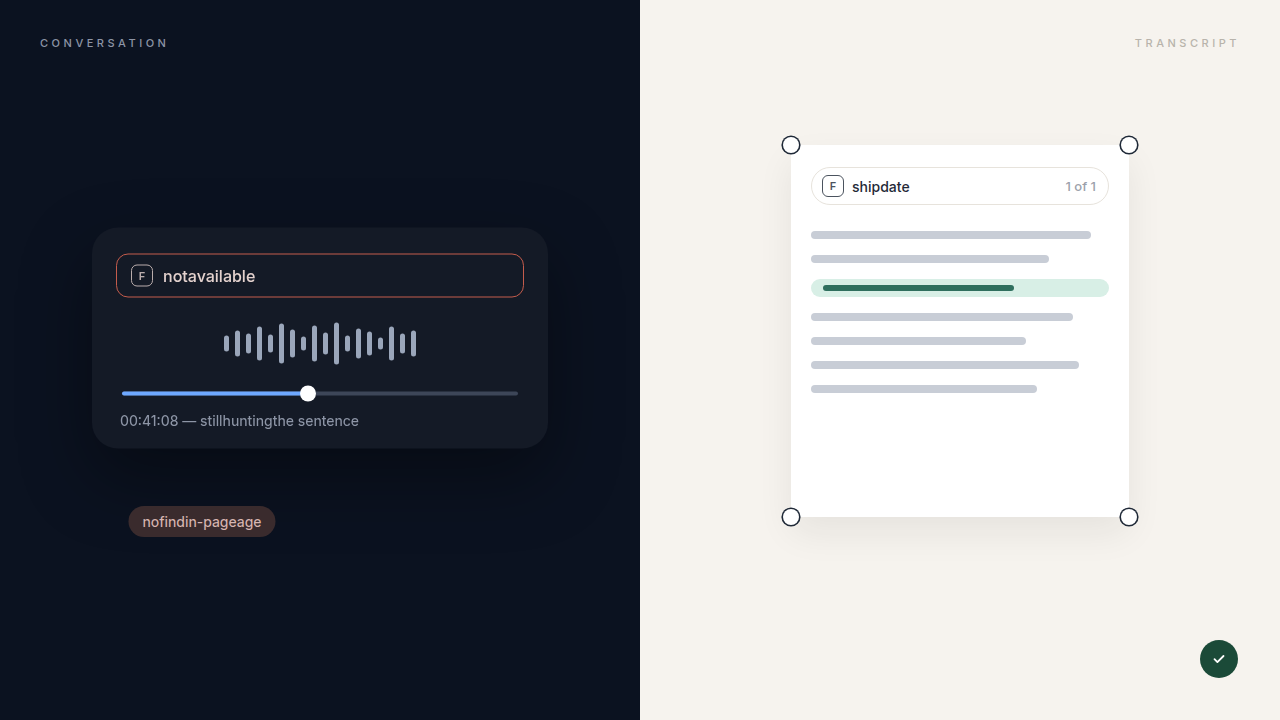
You know the shortcut. You open a doc, hit Cmd-F, type three words, and land on the claim.
You cannot do that to a conversation.
A call, a lecture, a hallway clarification, a voice memo — those are timelines, not pages. The sentence you need is somewhere between "can everyone hear me" and "anyway, next topic." There is no find bar. There is only scrubbing, memory, and hope.
That gap is why teams keep re-deciding the same thing.
Search is the default interface for work
Modern work assumes text:
- Tickets expect a searchable description
- Docs expect headings you can jump to
- Chat expects a phrase you can quote
- Your own notes expect Ctrl/Cmd-F when you forget the wording
Speech ignores all of that. The information is present. The interface is wrong.
So people invent workarounds that feel productive and still fail:
- Writing "notes" that omit the exact phrase
- Asking in Slack what was decided again
- Scrubbing a recording at 1.75× until the right voice appears
- Trusting whoever typed the follow-up email first
None of those are search. They are archaeology.
Why timelines fight retrieval
A media file is indexed by time, not meaning. The player can tell you duration. It cannot tell you where someone said budget, ship date, or no.
That creates a tax every time you need one detail:
- You open the file
- You guess a timestamp
- You listen past throat-clearing and side chats
- You miss the line, rewind, listen again
- You retype what you think you heard into the place work actually lives
Reading a transcript collapses that loop. Your eyes skip filler. Your fingers highlight. Your next search hits the same archive instead of restarting the dig.
Cmd-F is not a nicety. It is how knowledge compounds.
The false comfort of "I was there"
Being in the room feels like insurance. You heard it. You will remember.
You will not remember the precise wording, the number, or which option was rejected. Neither will the three people who "agreed" with slightly different interpretations. Weeks later the recording is still there — and still unsearchable — so the debate returns with fresh confidence and no receipts.
Attendance is not an index.
Make the conversation findable
The fix is not better note-taking theater. It is turning speech into a document while the context is still warm.
- Capture the call, lecture, or memo
- Transcribe it into clean, editable text
- Skim once for the decisions and quotes
- Paste the lines that matter into the ticket, brief, or doc
- Keep the transcript as the searchable source of truth
After that, Cmd-F works the way your brain expects: type the phrase, land on the sentence, move on.
On iPhone, open To The Text, pick the video or audio, and export a transcript you can search — then find the line instead of replaying the afternoon.
Conversations are how work starts. Text is how work stays findable.