The Expert Who Left Is Still on Tape
When a colleague leaves, their knowledge usually leaves with them, except for the handover calls you recorded. Here's why transcribing those recordings is what turns them into something the team can actually use.
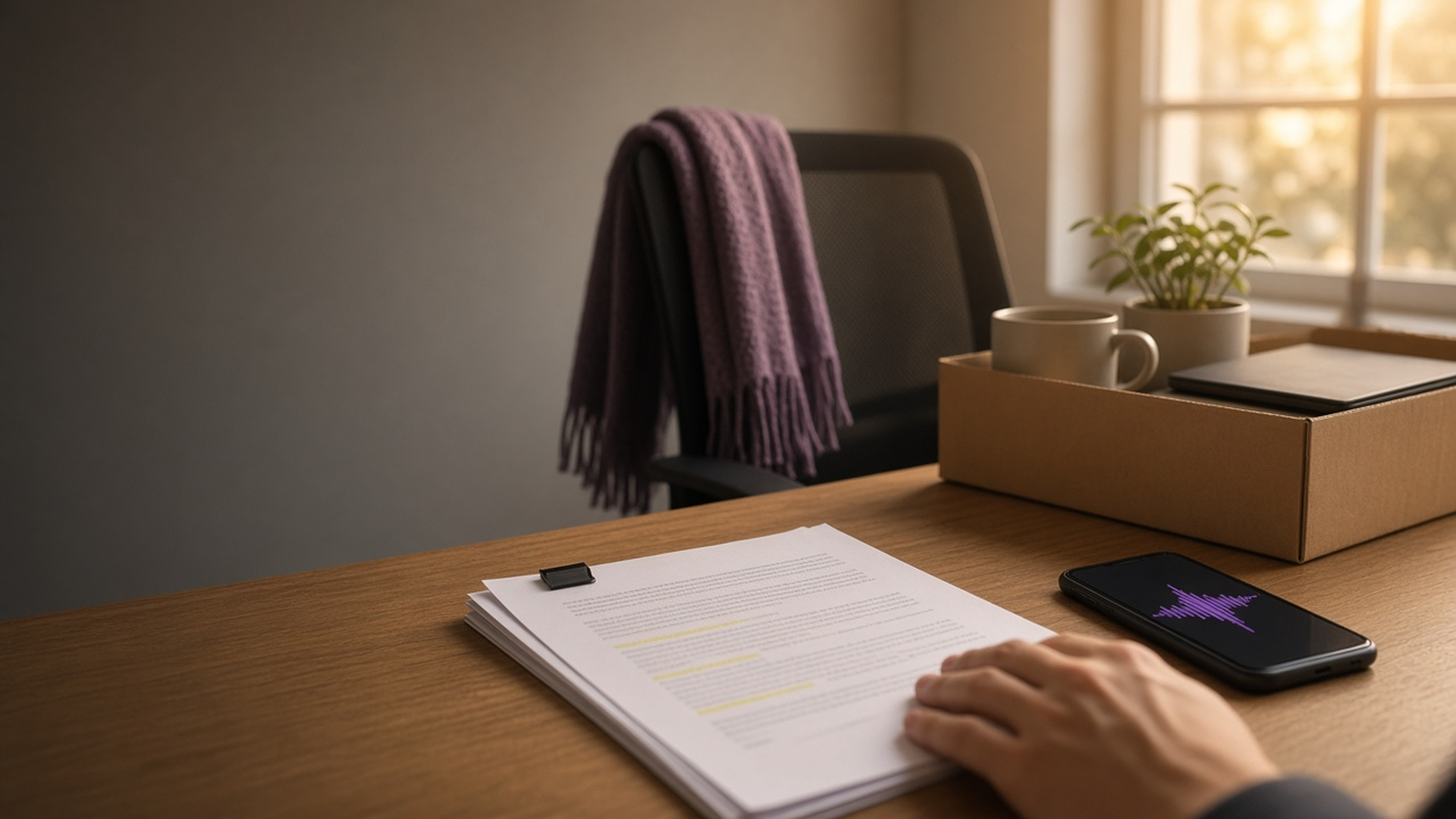
Her last two weeks were full of handover calls. The person who had run the billing system for six years walked her replacement through the strange cron job, the client who always pays late, the spreadsheet that must never be sorted, and the reason the backup runs at 3:17 instead of 3:00. Everyone agreed to record the calls. It felt responsible.
Three months later, nobody has opened a single file.
Then something breaks, and the question comes up: didn't she explain this once? She probably did. It's somewhere in eleven hours of video, between a tangent about the old office and a long pause while someone shares the wrong screen.
The knowledge didn't leave the company. It just left the searchable part of it.
Recording feels like keeping
Handover recordings are one of the most common ways teams try to hold on to expertise. Someone gives notice, a manager panics a little, and a calendar fills with sessions titled "KT: payments" and "KT: vendor contacts." The record button is pressed, and the problem feels solved.
But a recording is a promise to remember, not a memory. It preserves the sound of an explanation without making the explanation findable. And handover knowledge is exactly the kind you need in a hurry: at 9 a.m. when the integration fails, or during the audit when someone asks why a rule exists. Nobody in that moment is going to scrub through a video hoping the answer is in the second hour.
So the files sit in a shared drive, named by date, slowly turning into a museum nobody visits.
Why handover talk is worth more than handover docs
It's tempting to say the departing person should have just written everything down. Sometimes they do, and those documents are useful. But anyone who has read a handover doc knows its limits. It lists what to do. It rarely captures why.
The good stuff comes out when people talk:
- The exceptions. "Normally you'd do X, but for this one client we always do Y, because of something that happened in 2021."
- The history. Why the workaround exists, what was tried before, which "obvious" fix already failed.
- The warnings. "Don't touch that setting. I know it looks wrong."
- The people. Who actually answers emails at the vendor, who to call when the official contact goes quiet.
That kind of detail almost never makes it into a written document, because the expert doesn't think of it as knowledge. It's just how things are. It only surfaces when the new person asks a question and the expert answers off the cuff. Which means the recording often holds more than any doc ever will.
The problem is only that it's trapped in audio.
What a transcript changes
Turn those eleven hours into text and the situation flips.
You can search it. The 3:17 backup, the late-paying client, the forbidden spreadsheet: type a word and land on the exact moment she explained it. A question that would take an afternoon of rewatching takes ten seconds.
You can skim it. Reading is several times faster than listening, and on the page you can skip the screen-sharing chaos and the small talk without worrying you'll miss something. Your eyes find the dense parts on their own.
You can quote it. "Per the handover call on March 3" carries more weight in a decision than "I think she mentioned something like that." The exact words matter when you're deciding whether a weird rule is safe to remove.
You can build on it. A transcript is raw material. Pull the answers out into a proper runbook, a FAQ for the next hire, or a short list of "things that look broken but aren't." The expert did the hard part by talking. You just have to shape it.
A simple way to rescue a handover
You don't need a knowledge management project. You need a few steps you can do in an afternoon.
- Collect the recordings in one place. Calls, screen recordings, voice memos the expert sent from the car. Anything where they explained something.
- Transcribe all of them. Not just the ones that seem important. You don't know yet which call holds the answer you'll need in June.
- Name the files by topic, not date. "Billing – exceptions and late payers" beats "Meeting 2026-03-03" every time.
- Read each transcript once and mark the gold. Highlight warnings, exceptions, and anything starting with "the reason we do it this way…" Those lines are the real handover.
- Pull the highlights into one living document. Link each point back to the transcript it came from, so anyone can check the full context.
- Keep the transcripts next to the docs. When the summary isn't enough, the full conversation is one click away and fully searchable.
If the expert is still around, even better: send them the transcript and ask, "Is anything here wrong or missing?" People are far more willing to correct a page than to sit through another hour of recording.
It's not only for people leaving
Departures make the problem obvious, but the same thing happens constantly in quieter ways. A senior engineer explains the architecture to a new hire on a call. A founder walks a contractor through the brand rules. An agency briefs a client's new marketing lead. A parent records a long voice message explaining how the old house's heating works before the tenants move in.
Each of those is a small handover, and each one gets lost the same way: recorded, saved, never found again. The moment you treat "transcribe it" as the last step of the call instead of an optional extra, all of those explanations start adding up into something a team, or a family, can actually lean on.
The expert's voice, kept usable
There's something a little sad about a folder of handover recordings nobody plays. Someone spent their last days carefully explaining years of experience, and it ended up as files no one can use.
A transcript is a small act of respect for that effort. It keeps their exact words, their warnings and their reasons, in a form the next person can search, read, and trust. The expert left. Their knowledge doesn't have to.
If your handover calls, screen recordings, or long voice explanations are sitting unplayed, To The Text turns them into clean, searchable text right on your iPhone, ready to read, quote, and turn into the docs your team actually needs.