The Council Meeting Nobody Watched
Local government meetings are recorded and posted online, then almost never watched. Transcribing those videos turns four hours of public record into text you can search, quote, and actually hold people to.
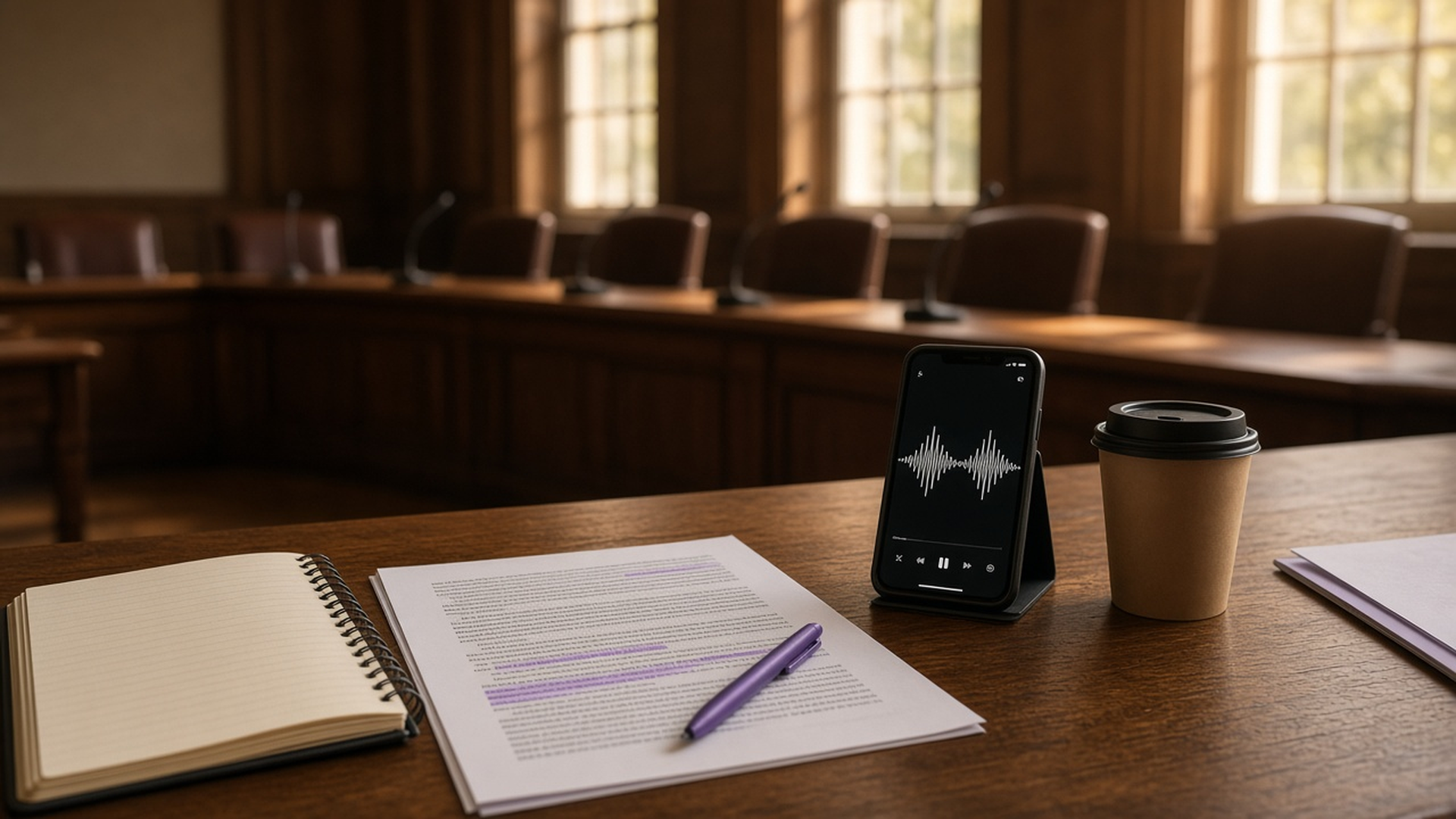
Somewhere near you, right now, there is a recording of a city council meeting that runs three hours and fifty-two minutes. It has been on the town's website for a week. It has nineteen views, and at least four of those are from council staff checking that the upload worked.
Inside that recording, a councilmember explained exactly why the new bike lane was cut from the plan. A resident described, in two careful minutes, the flooding on her street that the drainage report never mentioned. The planning director said a date out loud, a real date, for when the library repairs would start.
All of it is public. Almost none of it is known.
Local democracy has become remarkably transparent and almost completely unreadable.
Recorded is not the same as accessible
Over the last decade, a quiet shift happened. Councils, school boards, zoning committees, and county commissions started streaming and archiving their meetings. That was a real win. Fewer decisions happen with no record at all.
But a video is a strange kind of record. It's complete, and it's also nearly impossible to use. If you want to know what the school board said about the bus schedule, you can't search the video for "bus." You scrub. You guess. You land in the middle of a discussion about a roof contract, back up, skip ahead, and give up after twenty minutes.
The official minutes don't really solve this either. Minutes record motions and votes: who moved, who seconded, what passed four to three. They're designed to capture outcomes, not reasoning. The part you actually care about, why someone voted no, what the staff report really said, what the public was promised, usually lives only in the spoken discussion.
So the record exists in a form that rewards only the people with hours to spare. That tends to be the people who were already in the room.
Who actually needs these words
It's easy to think of meeting transcripts as a niche tool for journalists. They are that, but the list is longer.
- Local reporters. Many towns have one reporter, or half of one, covering everything. They can't sit through every committee. A transcript lets them read a four-hour meeting in twenty minutes and find the one exchange worth a story.
- Residents with one issue. You don't care about the whole meeting. You care about the crosswalk outside your kid's school. Searching a transcript for "crosswalk" takes seconds.
- Advocacy groups and neighborhood associations. They need to track what officials said over months, not just one night, and quote it accurately when they push back.
- Councilmembers and staff themselves. People forget what they committed to. A searchable record of their own words is useful to them, too, especially when a question comes back six months later.
- Students and researchers. Anyone studying how local decisions get made needs the deliberation, not just the vote tally.
What all of them share is the same problem: the information is technically available, but buried in a format that costs hours to dig through.
What changes when the meeting becomes text
Turning the recording into a transcript doesn't add any new information. It just moves the information into a shape people can work with.
You can search it. Type a street name, a project, a person, a dollar amount. The relevant moments surface immediately, even if they happened in a different agenda item than you expected.
You can skim it. Reading is several times faster than listening, and you can skip the procedural parts (roll call, approving last month's minutes, the twelve-minute discussion about microphone settings) without fear of missing something, because you can see what you're skipping.
You can quote it exactly. This matters more than it sounds. "The councilmember said the project was dead" and "the councilmember said the project was 'not a priority for this budget cycle'" are very different claims. One invites a correction; the other is just accurate. A transcript lets you get the words right.
You can compare meetings. When the same topic comes up in March and again in September, you can put the two passages side by side. Did the timeline shift? Did the justification change? Patterns across meetings are almost invisible on video and obvious on paper.
You can share a specific moment. Instead of "it's somewhere around the two-hour mark," you can paste the exact paragraph into an email, a neighborhood group, or a letter to the editor.
A simple workflow for following local meetings
You don't need a newsroom to do this. A phone and a bit of routine are enough.
- Pick the meetings that matter to you. Most people don't need every committee. Choose the council, the school board, or the planning commission, whichever touches your life.
- Grab the recording. Download the posted video or audio, or record the livestream audio if you're watching anyway. Public meetings are, by definition, public.
- Transcribe the whole thing. Don't try to pick the "important" part first. You won't know where it is until you can search.
- Search before you read. Start with your keywords: your street, the project name, the budget line. Read around each hit, a few paragraphs before and after, to get the context.
- Highlight and save the quotes. Copy the exact passages you might need later into a running document, with the meeting date and the rough timestamp.
- Keep the archive. A folder of transcripts from the last year of meetings is surprisingly powerful. When an issue resurfaces, you can find every time it was mentioned in under a minute.
The last step is the one people skip, and it's the one that pays off most. Local issues are slow. The same parking garage, the same school boundary, the same zoning variance comes back again and again. The person with the searchable history is the person who can say, calmly and accurately, "In April you told us this would be done by fall."
A few honest caveats
Transcripts of public meetings aren't perfect, and it's worth knowing where they struggle.
Room audio can be rough. Speakers sometimes forget to use the microphone, residents speak from the back, and three people occasionally talk at once. Expect the occasional garbled sentence, and go back to the recording for anything you plan to quote publicly.
Names are hard. Local street names, surnames, and project acronyms are exactly the words automatic transcription is most likely to get wrong. A quick search-and-replace after you spot the first error fixes most of them.
And a transcript is not the official record. If something is legally significant, a vote, a formal statement, cite the official minutes and the recording alongside your transcript. The transcript is your map to the record, not a replacement for it.
The record should be readable
Recording public meetings was the first step toward openness. Making those recordings readable is the second, and it's one anyone can take on their own, one meeting at a time.
You don't need to watch four hours of video to know what your local government said. You need the words, in a form you can search, skim, and quote.
If you want to try it with the next meeting in your town, To The Text turns video and audio recordings into clean, searchable transcripts right on your iPhone. Download the recording, drop it in, and read the meeting nobody else watched.