If You Can't Paste It, You Don't Own It
A recording on your phone is not a usable idea. Until speech becomes text you can copy into a doc, a ticket, or a message, you are renting the thought — not keeping it.
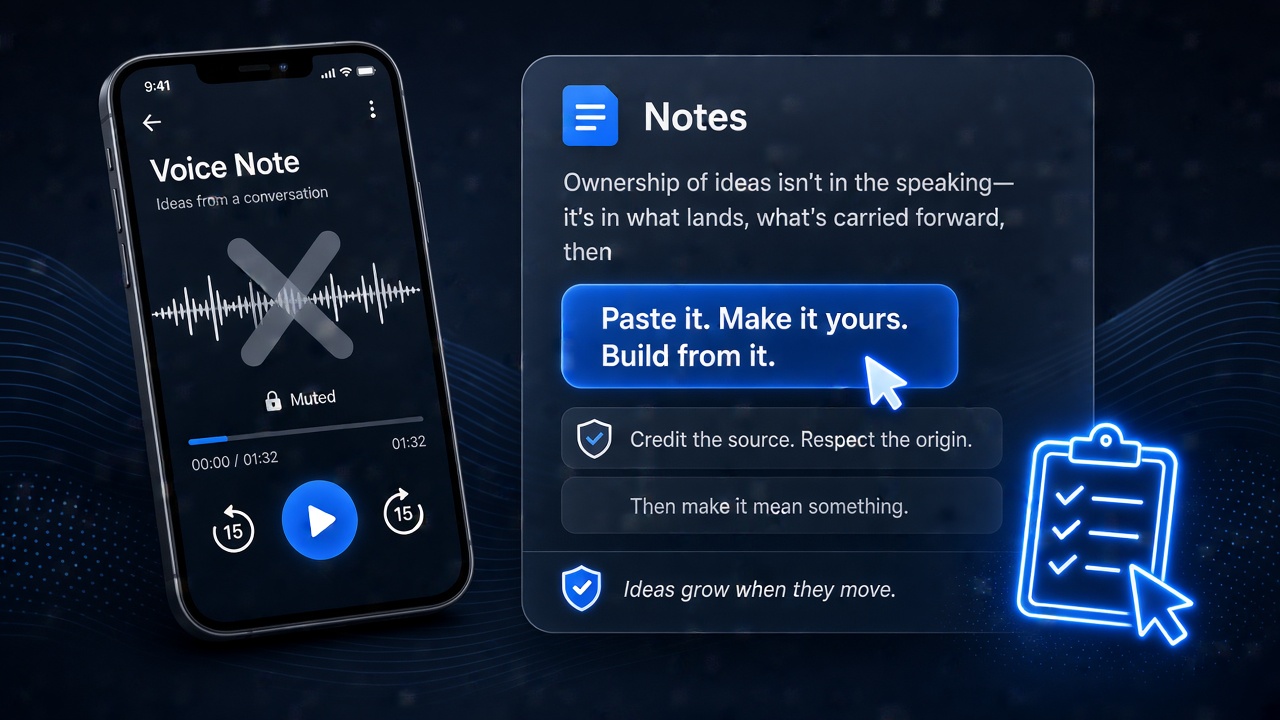
You recorded the call. You saved the voice memo. You told yourself the idea was safe.
It is not. Not yet.
A file you can play is custody, not ownership. Ownership starts when a sentence can leave the player — when you can paste it into a brief, a ticket, a Slack thread, or a draft without retyping from memory.
That is the boring test most people skip: if you can't paste it, you don't own it.
Playback is a locked box
Media players are great at one job: moving time forward. They are terrible at every job that comes after a good conversation.
You cannot:
- Drop a quote into a PRD without pausing and typing by ear
- Search three months of hallway decisions by phrase
- Hand a teammate the exact sentence without narrating it again
- Highlight the disputed line in a disagreement
You can scrub. You can speed up. You can listen twice. None of that turns speech into something portable.
Portable is the point. Work moves between apps. Ideas that only live inside a waveform stay behind.
Why "I have the recording" feels like enough
Saving a recording feels responsible. The source exists. Nothing is lost. You could always go back.
What usually happens:
- Going back costs more attention than the detail is worth
- The quote you remember is softer or sharper than what was said
- The person who needs the line was not in the room, so they ask you to retell it
- The retelling becomes the new source of truth
Custody creates a false calm. The file sits in the camera roll like a receipt in a wallet you never open. The organization still runs on imperfect memory plus whoever writes first.
Paste is the real unlock
Accuracy matters. Speaker labels matter. Export formats matter. But the daily win is smaller and sharper: a clean block of text you can move.
Paste is how spoken work joins written work.
- A founder pastes a customer line into the roadmap note
- A journalist pastes a quote into a draft without inventing punctuation from headphones
- A student pastes a definition into flashcards instead of rewatching a lecture for one clause
- A PM pastes the decision sentence into the ticket so the debate stops reincarnating
Once the words are text, every tool you already use becomes a second brain for the conversation. Notes apps, docs, chat, email, issue trackers — they all speak paste. Almost none of them speak "open this m4a and find the bit around minute seventeen."
Ownership has a shape
Owned speech looks ordinary:
- It can be searched
- It can be quoted with confidence
- It can be edited without reopening the file
- It can be shared without forcing someone else to listen
Unowned speech looks busy: long recordings, good intentions, another afternoon spent "just checking the call."
Transcription is not a niche hobby for people who love documents. It is how spoken work stops being trapped in a player.
Make text the first artifact
After the memo, the interview, or the recorded stand-up, get the words out while the context is still warm. Skim. Copy the lines that matter. Leave the rest as searchable history instead of a guilt pile.
On iPhone, open To The Text, pick the video or audio file, and export a transcript you can actually use — then paste the sentence that mattered into the place your work already lives.
Keep the recording if you want the source. Keep the transcript if you want the work.
The idea is only yours when it can travel.