A Summary Is Not a Receipt
Auto-generated meeting summaries feel like documentation. They are an editorial layer. A transcript is the receipt — the words you can still open when the summary gets the tone wrong.
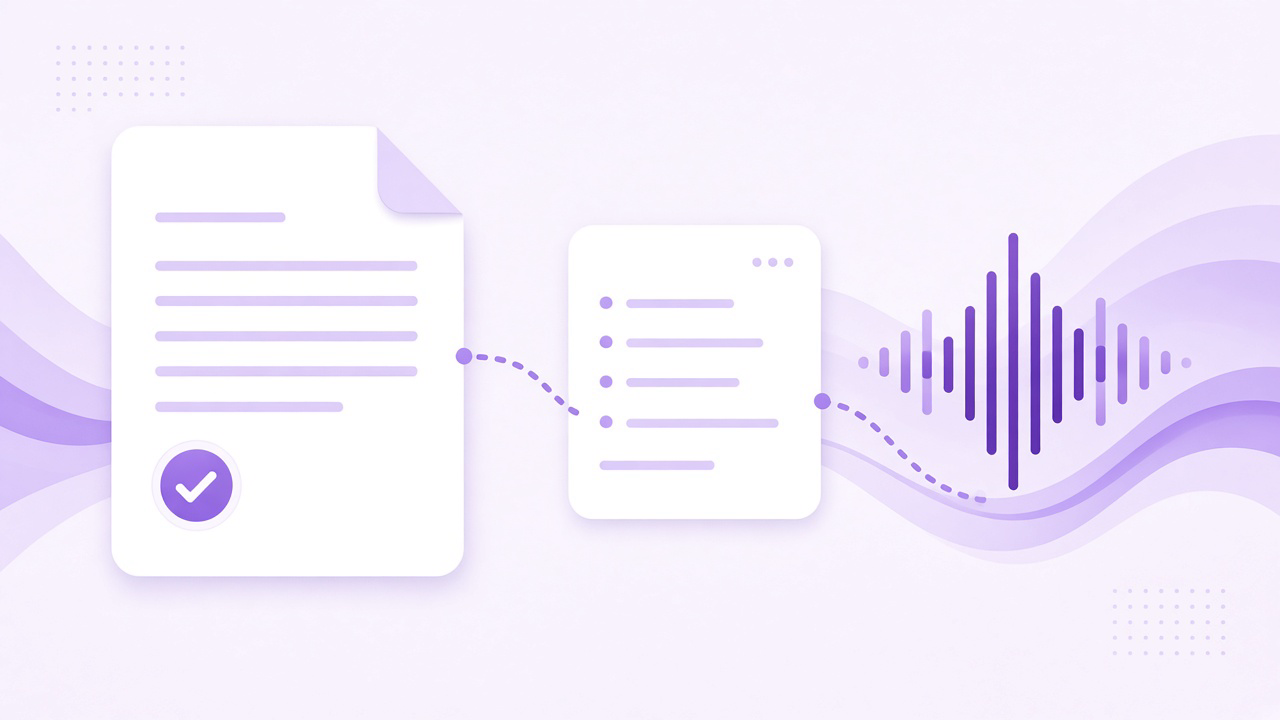
The call ends. Thirty seconds later a tidy card appears: Summary, Key points, Action items.
It looks finished. It looks official. It feels like the work is done.
It is not a receipt. It is a story with a confidence score.
What a summary actually is
A summary is an editorial product. Something — a person, a model, a bot in the calendar invite — chose which sentences survive and which ones die.
It keeps:
- Claims that sounded decisive
- Names that looked assignable
- Topics that fit a short list
It quietly drops:
- The hedge that made the deadline soft ("if we get design")
- The dissent that never became a formal objection
- The joke that revealed the real constraint
- The exact wording people will later argue about
None of this requires malice. Compression always picks winners. The problem is treating the winners as the original.
Why auto-summaries feel safer than they are
Teams love them for good reasons. Nobody wants to rewatch an hour. Nobody wants to take minutes while also thinking. A one-pager that arrives before anyone leaves the Zoom feels like magic.
What it often replaces:
- The source. People stop keeping the recording or the transcript because "we already have notes."
- Disagreement protocol. Challenging a bullet feels like challenging the bot — or the organizer who forwarded it.
- Ambiguity. Spoken maybe becomes written yes because uncertainty looks unfinished on a slide.
You did not gain documentation. You gained a polished opinion about the meeting, stamped with the authority of software.
Receipts vs reviews
Think about how money works.
A receipt shows what happened: the line items, the total, the timestamp. You may still write a short note on top — "client dinner" — but the note does not replace the receipt when the tax office asks.
A review says what mattered: "great meal," "overpriced," "would return." Useful. Not evidence.
Meeting summaries are reviews. Transcripts are receipts.
When someone says, "That is not what we agreed," a summary forces a fight about interpretation. A transcript lets you open the page and point at the sentence. You can still disagree about meaning. You stop arguing about whether the sentence existed.
The quiet tax of "we have the AI notes"
Without a transcript underneath, organizations pay in familiar ways:
- Drift. The summary becomes the input to the ticket, which becomes the input to the deck. Each layer drifts further from speech.
- False consensus. Soft commitments harden into "we decided" because the bullet list has no room for tone.
- Missing why. Action items without the surrounding argument become cargo cult tasks. People execute the what and forget the constraint.
- Re-litigation. Two weeks later the only record is a paragraph nobody can quote with confidence.
A summary can still be useful. The order matters.
Wrong order: talk → generate a short story → delete the evidence → treat the story as the record.
Better order: capture the words → skim → write (or accept) a short summary that points back to the source.
How to keep the receipt
After a recorded call, lecture, or sync:
- Get a transcript — searchable, pasteable, editable text of what was said.
- Treat the auto-summary as a draft headline, not the archive.
- Highlight the decision sentences and commitments in the transcript.
- File the transcript where the work lives: the ticket, the doc, the vault — next to any one-pager you still want.
If your tooling only gives you bullets, keep the recording long enough to turn it into text. Playback is optional after that. The words are already on a page.
Soft close
If your team's "record" of important conversations is only a generated summary, you are not documenting meetings. You are publishing short reviews of them.
To The Text turns recordings on your iPhone into clean text you can skim, quote, and keep — so the summary, when you want one, still has a receipt underneath.